
3.1 Resources
3.1.1 The AGOR Cyclotron
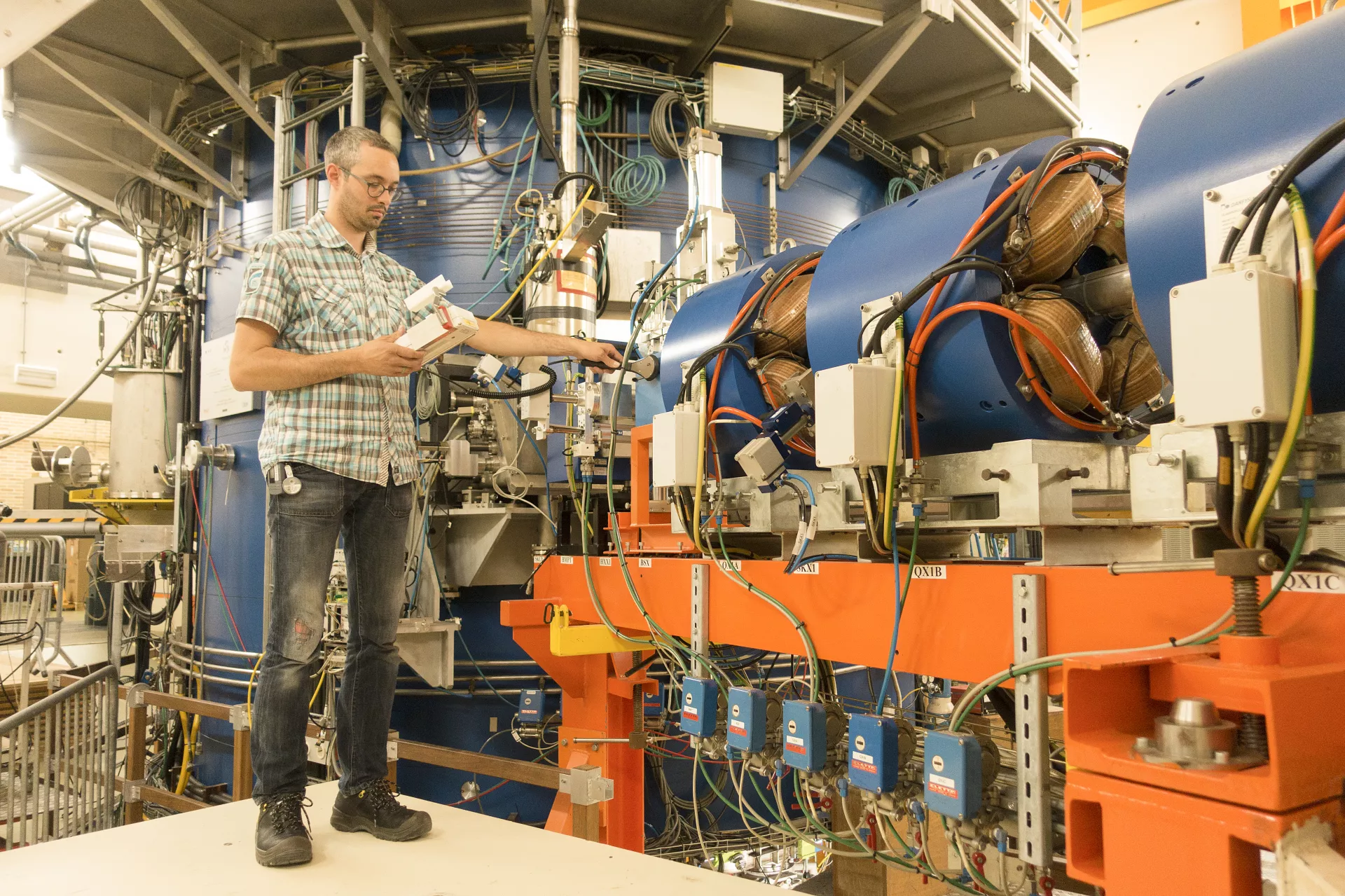
The superconducting AGOR cyclotron provides protons up to 190 MeV and heavy-ion beams at 30MeV per amu (up to Xenon) or 90 MeV per amu (up to Oxygen).
For more specifications of our equipment, please contact us. Our contact details can be found below.
3.1.2 In-air Irradiation Facility
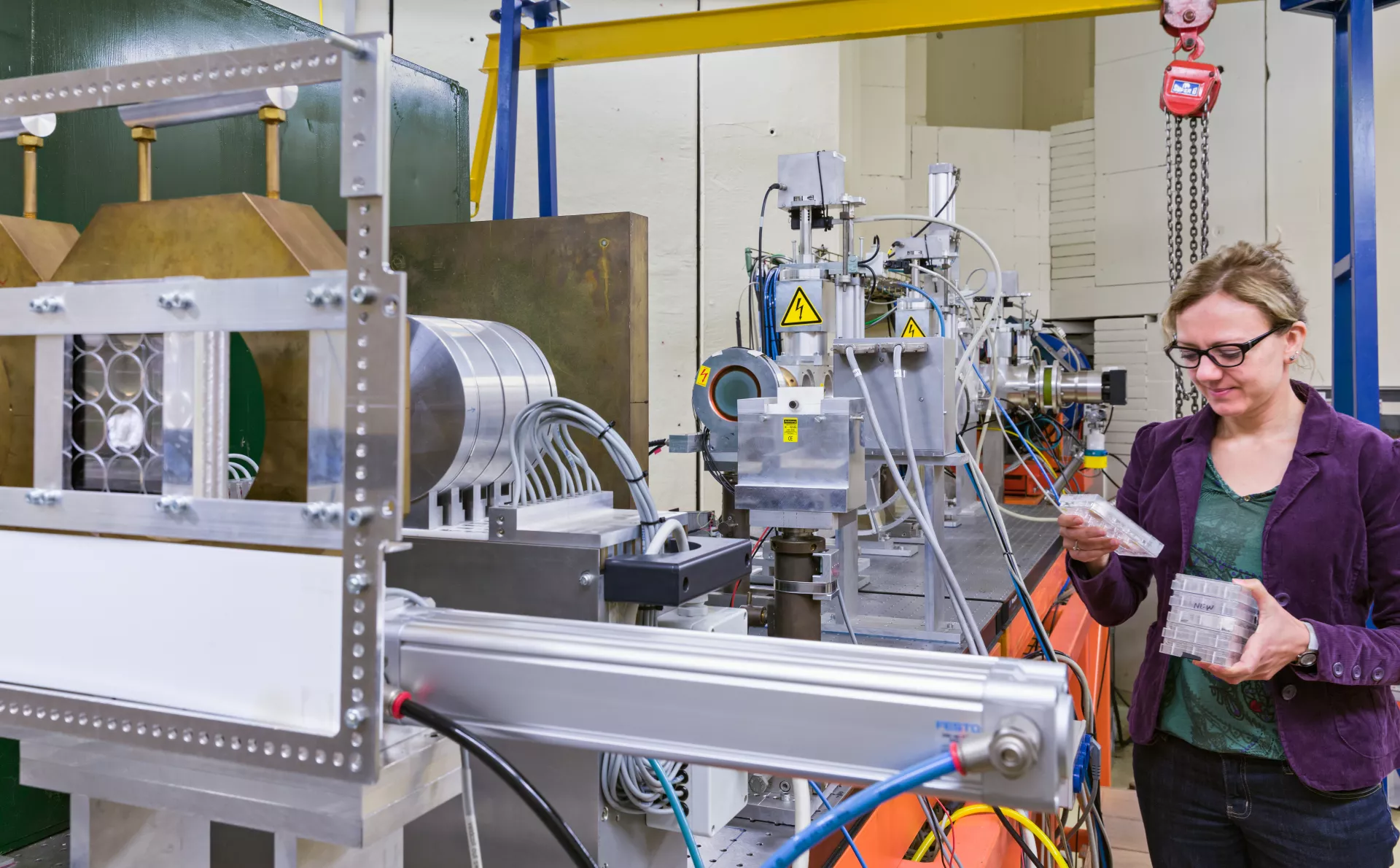
This setup can be used for cell culture irradiations and various tests for medical diagnostic equipment as well as for commercial irradiation of electronic devices to be used for space research.
3.1.3 Laboratory Space Facilities
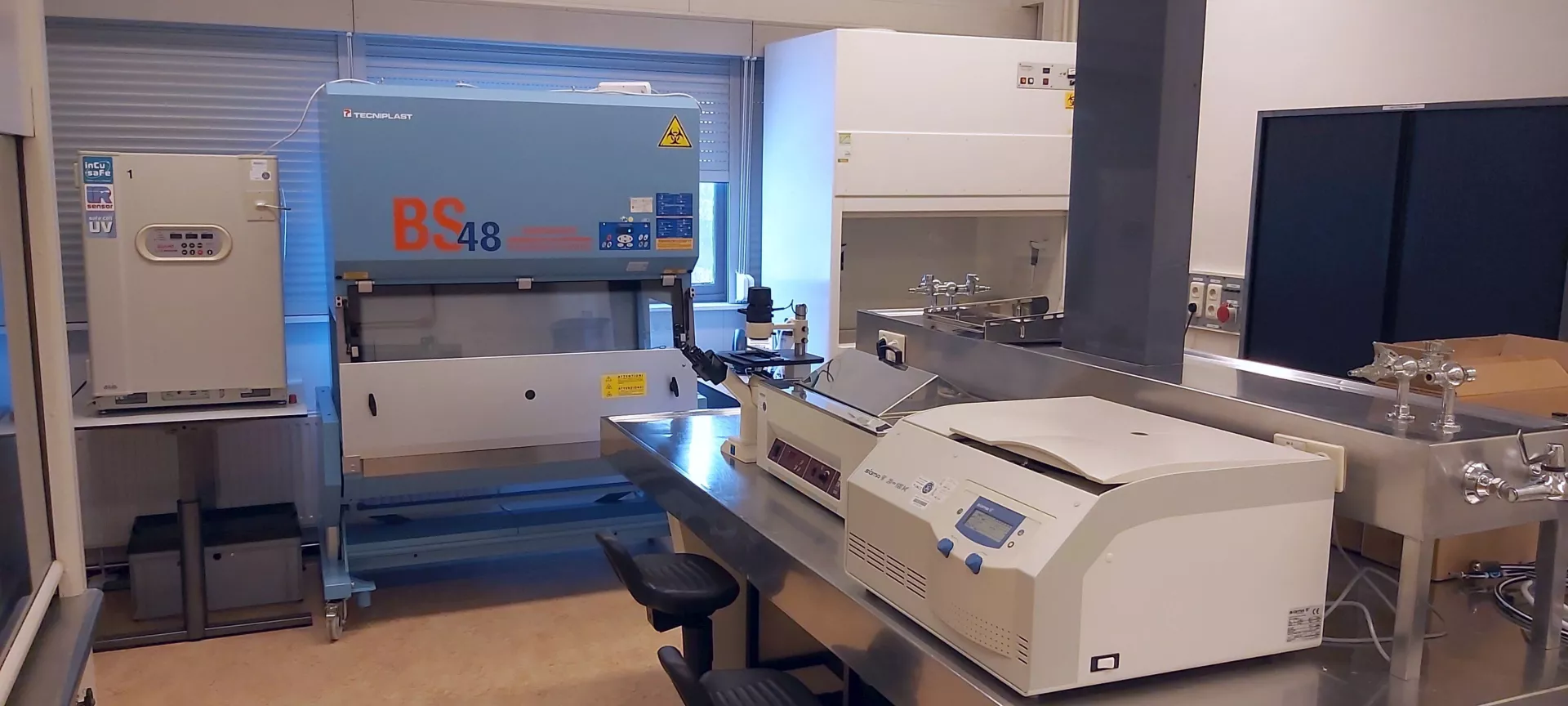
For cell cultures, a flow cabinet and incubators are available. This equipment can be used in two separate laboratories.
- Incubators
- Flow cabinets
- Cell culture facilities
3.2 Features
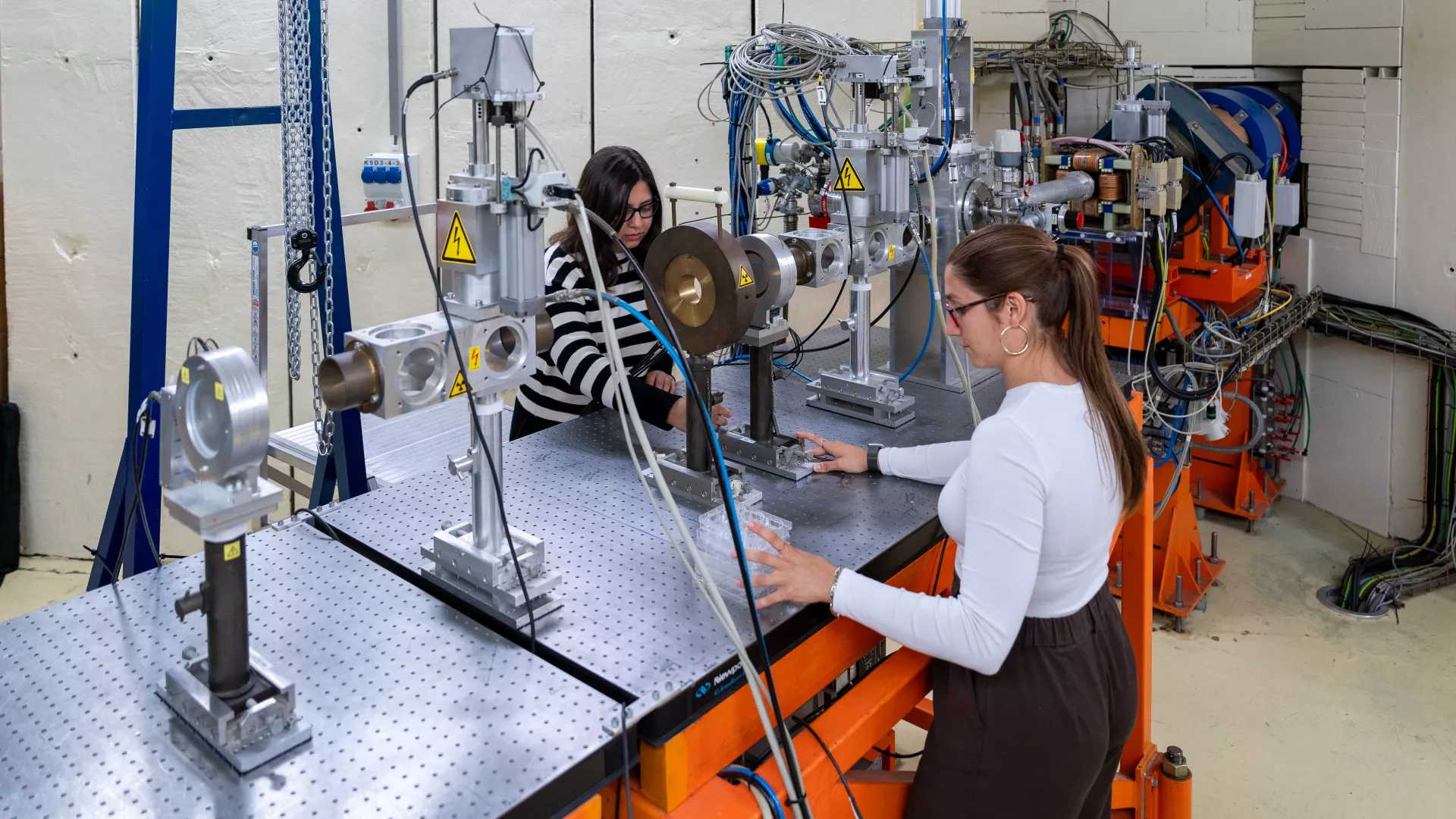
3.2.1 Irradiation and Field Forming System
- Device-Under-Test (DUT)s are irradiated in air
- Scatter foils and an X-Y scan magnet system provide a homogeneous beam
- The magnets scan the heavy ion beam
- Changing beam parameters:
- Seconds to change beam intensity
- One hour between different species in the ion cocktail
- Eight hours from protons to ions (or from ions to protons)
- Eight hours to change ion cocktail energy
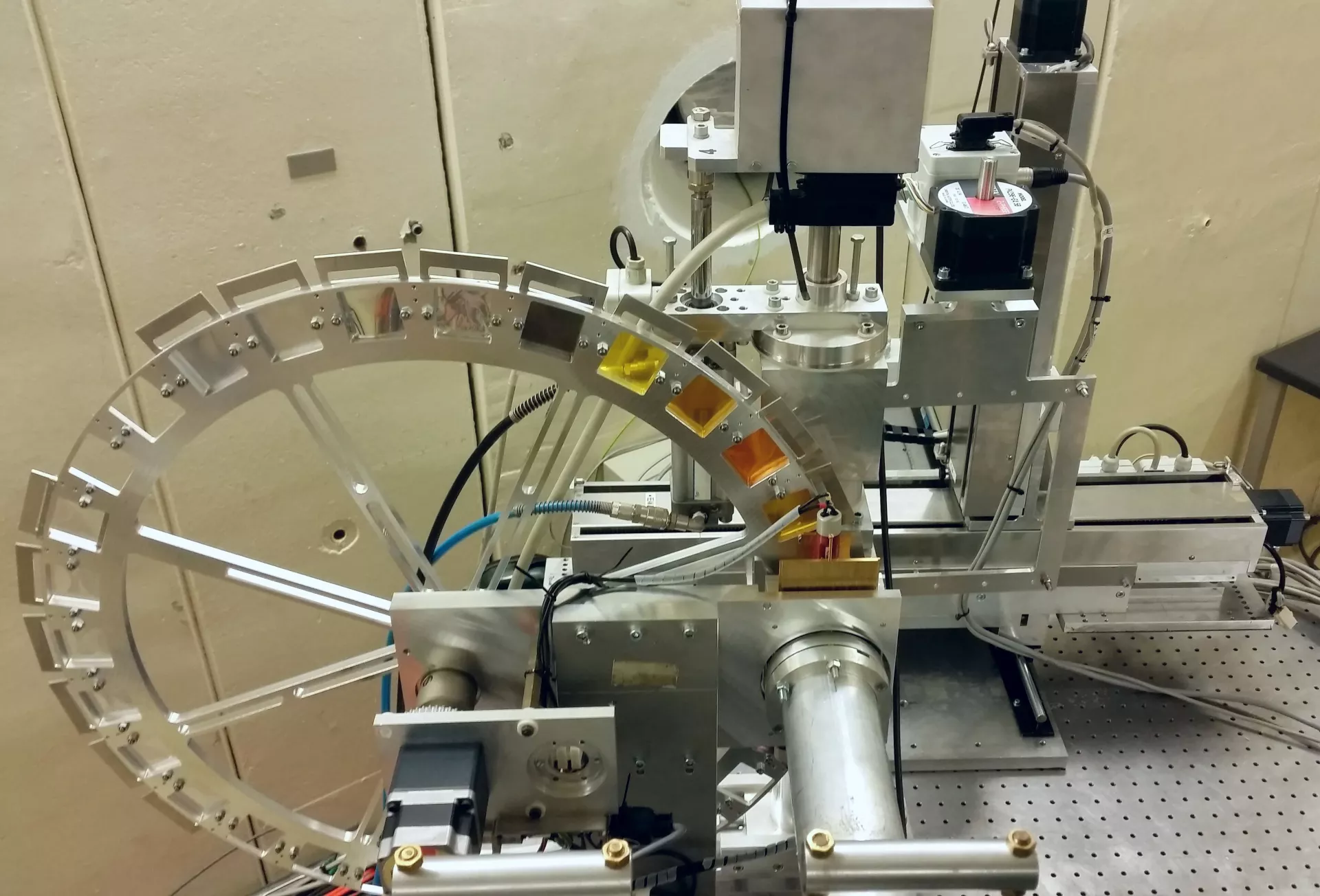
3.2.2 Degrader System
- A remotely controlled degrader is used to vary proton beam energy on DUT
- Degrader consists of movable carbon slabs of various thicknesses.
- A Si detector is used to guarantee beam purity
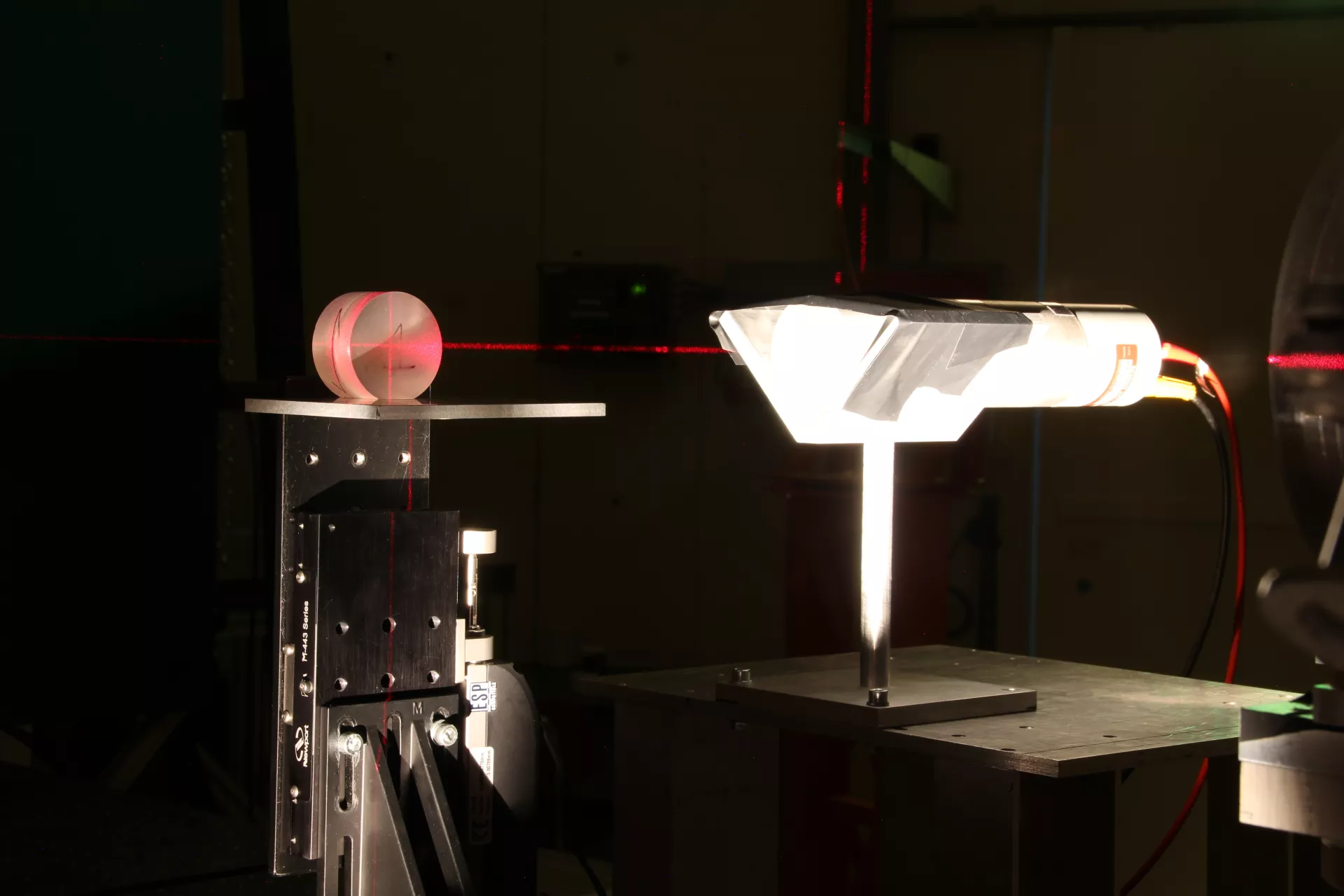
- A scintillation foil (LanexTM) is used to check field homogeneity (figure to the right)
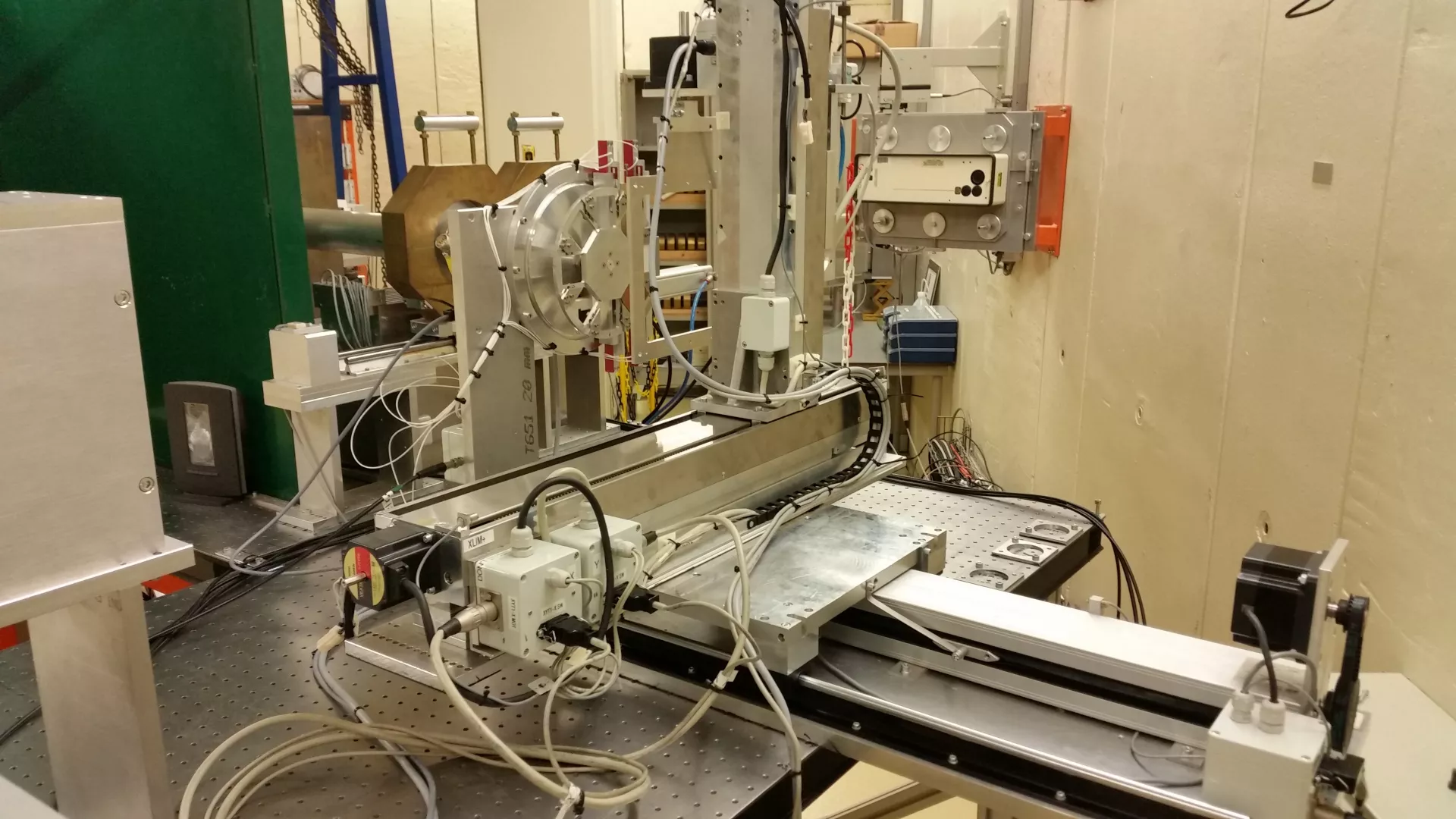
3.2.3 Positioning
- The X-Y-table is also movable in Z-direction for tuning the beam energy
- A rotation stage is included to allow the device to be irradiated at any angle
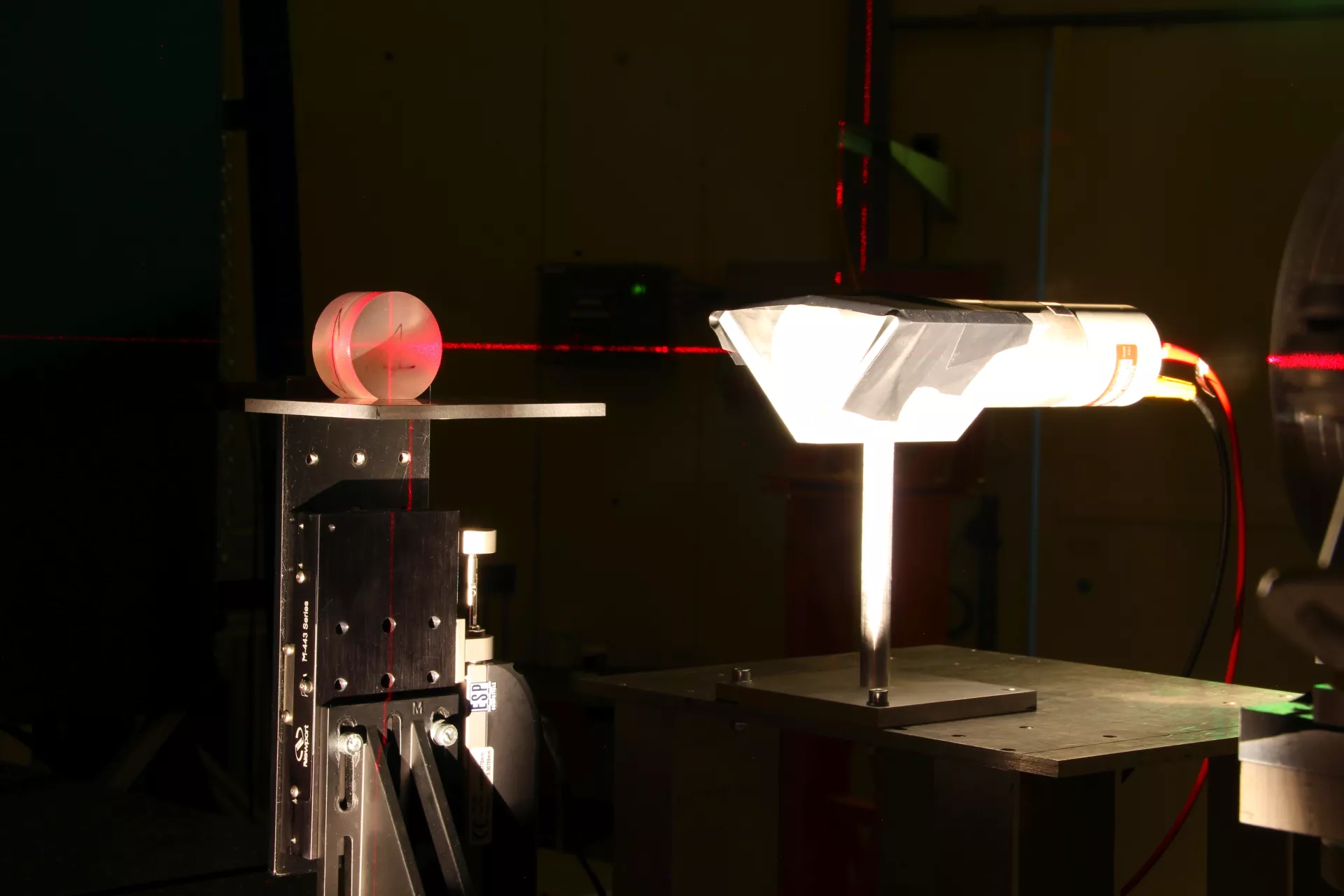
- Alignment is done via the lasers
- Video cameras for live view on DUT
3.2.4 Fluence Monitoring and Measurement
- Flux is monitored using four fast scintillation ‘edge detectors’ (YAP:Ce crystals readout with a Hamamatsu R12421 photo multiplier) by SCIONIX
- The ratio between upper/lower left and right ‘edge detectors’ monitors whether or not the field uniformity is changing
- Fluence is measured using a scintillation detector with a known surface area
3.3 Services
3.3.1 Academic Research Services
For scientific research, there are several ways that beam hours can be funded at our facility. Proposals must be submitted through the website of the individual project (see list below) after first consulting PARTREC staff about the feasibility and overall planning of your experiment. We then appreciate receiving the proposals submitted in the framework of these projects.
Here are projects that currently offer funding:
- RADNEXT: RADiation facility Network for the EXploration of effects for indusTry and research
- RIANA: Continuously Open Research Announcement for Investigations into the Biological Effects of Space Radiations
- CORA-IBER: Accelerator and Research reactor Infrastructures for Education and Learning
Previously, the following projects offered funding:
- ARIEL: Accelerator and Research reactor Infrastructures for Education and Learning
- INSPIRE: Infrastructure in Proton International Research
- ENSAR2 (ended in 2021): European Nuclear Science and Applications Research - 2
3.3.2 Industrial/ Commercial Services
We have been selling our beam time to commercial clients since 2005. This consists of proton in-air irradiations to non-domestic aerospace companies. There have been over 50 companies requiring our service over the years, 16 are return customers and 5 companies return every year.
Commercial beam hours can be obtained without a proposal for a fixed rate. If you are interested in beam time, please send your inquiry to our irradiations liaison via email: irradiations.partrec@umcg.nl.